

Pump Oil for Pressure Washer: What to Use and Why
Use a non-detergent SAE 30 or ISO 68 pump oil in your pressure washer crankcase. That’s the short answer, and it applies to the vast majority of plunger and triplex pumps on the market. If your pump manufacturer specifies a branded oil, such as the Cat Pumps ISO 68 non-detergent formulation, use that first. If you can’t source the OEM product, choose any clearly labeled non-detergent, non-foaming SAE 30 or ISO 68 oil designed specifically for high-pressure plunger pumps. Never substitute standard engine oil or a multigrade motor oil like 10W-30. The detergent additives in those products cause real damage over time, and the cost difference between proper pump oil and a ruined pump is not a trade-off worth making. Flowcraftwash builds commercial-grade systems around pumps that depend on this exact spec, and the guidance below applies whether you’re running a single-gun setup or a multi-gun skid rig.
Table of Contents
- What pump oil specs actually mean on the label
- Why non-detergent, non-foaming oil is the only right choice
- Can you use 10W-30, synthetic, or hydraulic oil instead?
- How to check and change your pump oil
- How often should you change pump oil?
- Winterizing your pump and using pump-saver products
- Recommended pump oil products available in the U.S.
- Why following manufacturer guidance protects your pump and your wallet
- Key Takeaways
- The case for treating pump oil as a system decision
- Useful sources for model-specific oil specs
What pump oil specs actually mean on the label
When you’re standing in front of a shelf of oil bottles, the label terms that matter are “non-detergent,” “non-foaming,” “crankcase oil,” and a viscosity rating of either SAE 30 or ISO 68. Those two viscosity designations are roughly equivalent: ISO 68 falls in the SAE 20–30 range, and most pump manufacturers treat them as interchangeable for standard operating temperatures. Some larger industrial pumps call for ISO 100, which is heavier. Always pull the model datasheet before you buy.
Key label terms to verify before purchase:
- Non-detergent — the single most important spec; confirms no engine-style cleaning additives
- Non-foaming — prevents air pockets that starve bearings of lubrication
- SAE 30 or ISO 68 — the viscosity grade covering most residential and commercial triplex pumps
- ISO 100 — heavier grade for some larger industrial models; check your pump manual
- “Pump oil” or “crankcase oil” — confirms the product is formulated for reciprocating pump use, not engine use
- Anti-wear additives (ZDDP) — protects bearings and crosshead rods under sustained high-RPM load
Pack size matters for commercial operators. A 21 oz bottle covers a single oil change on a small direct-drive pump. Quart bottles work well for mid-size triplex pumps, and gallon containers make sense if you’re servicing multiple units on a regular schedule. When your pump manufacturer lists a specific part number, like Cat Pumps’ proprietary ISO 68 oil, that product is worth stocking. It’s formulated to their exact tolerances and keeps your warranty intact.
Why non-detergent, non-foaming oil is the only right choice
The crankcase of a high-pressure plunger pump is not an engine. There’s no combustion, no carbon soot, and no need for detergents to suspend byproducts. What there is: reciprocating plungers, precision seals, crosshead rods, and bearings running at high RPM under sustained pressure. That environment has one specific lubrication requirement: the oil must stay clean, stay stable, and let any water intrusion separate out visibly.
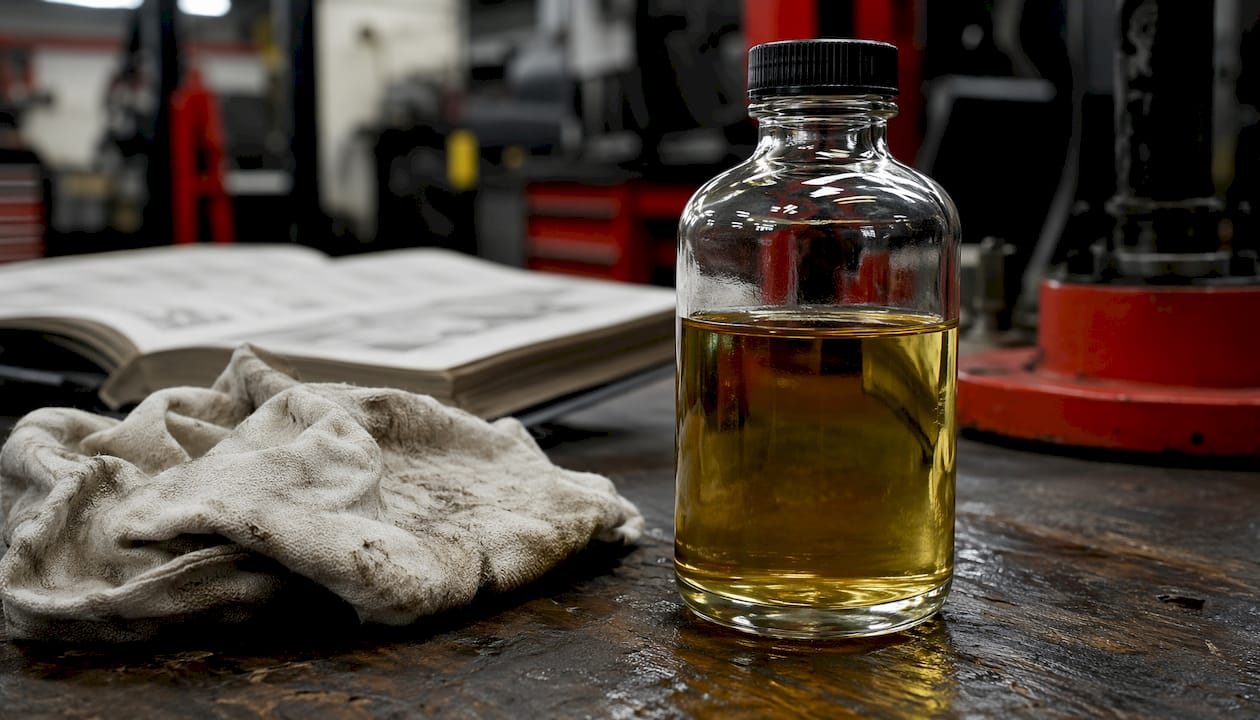
Non-detergent oil is engineered to do exactly that. Water and grit sink to the bottom of the crankcase rather than staying suspended, which means a quick look at your sight glass tells you whether a seal is failing. If the oil turns milky or cloudy, water has entered the crankcase. That’s a diagnostic signal you only get because the oil isn’t hiding the contamination. Detergent-based engine oils keep contaminants suspended, so the oil looks fine right up until the seals are already damaged.
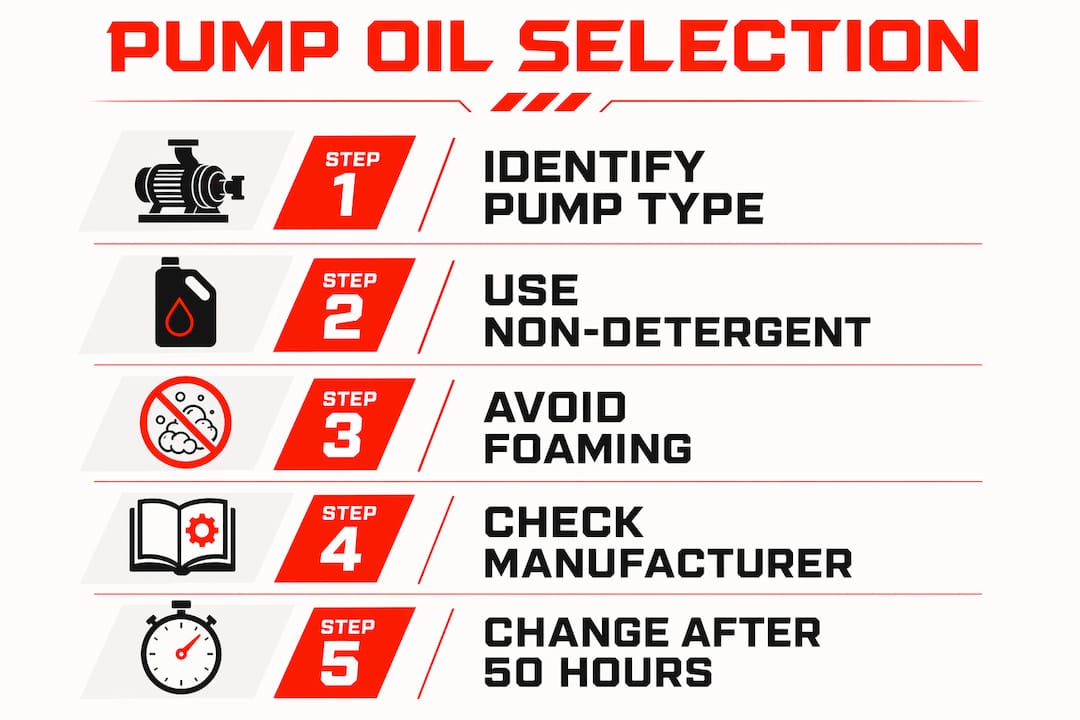
The non-foaming property is equally important. Foam creates micro air pockets inside the crankcase. Those pockets interrupt the oil film on bearings and crosshead rods, and at 1,400–3,500 RPM, even brief lubrication gaps accelerate wear. Anti-wear additives like ZDDP provide a chemical film on metal surfaces as a backup, but they work best when the base oil is already doing its job without foaming.
Pro Tip: Check the sight glass on level ground with the engine off and fully cooled. Milky or cloudy oil means water intrusion from a failed seal. Don’t run the pump again until you’ve changed the oil and identified the leak source.
Can you use 10W-30, synthetic, or hydraulic oil instead?
The short answer is no for standard engine oil, and “check your manual first” for everything else.
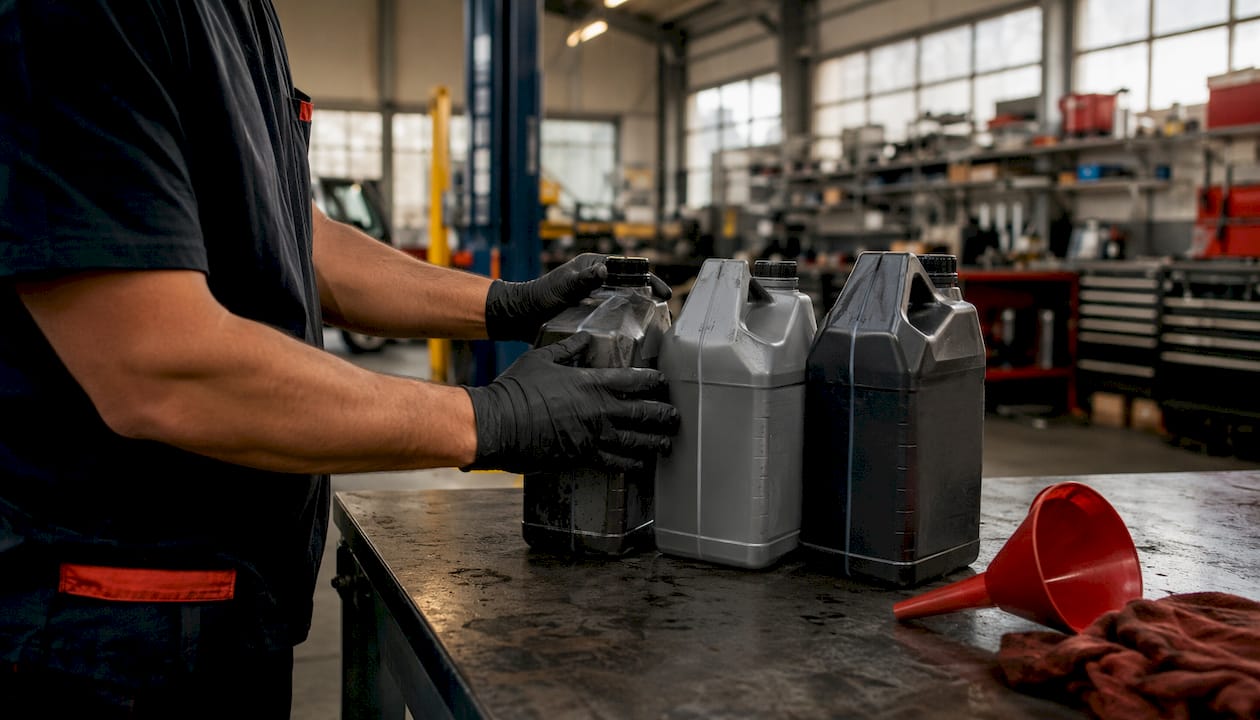
Standard detergent motor oils (10W-30, 5W-30, multigrade): These are the most common substitution mistake. The detergent package that makes them great for engines makes them actively harmful in a pump crankcase. Contamination stays suspended, you lose the early-warning signal from milky oil, and the additives can attack the rubber seals in the fluid end. Motor oils are not suitable for pump crankcases, and no amount of “it’s all I had” justifies the risk on a commercial pump.
Synthetic pump oils: Some synthetic formulations are compatible, but manufacturer approval is the deciding factor. Cat Pumps, for example, has withdrawn blanket approvals for alternative oils precisely because third-party formulas change without notice. A synthetic that was acceptable two years ago may have a different additive package today. If your OEM lists a specific synthetic, use it. If not, stick with the mineral-base non-detergent oil they specify.
Hydraulic oils and ATF: Hydraulic oils can have similar viscosity ranges, but their additive packages are designed for hydraulic systems, not reciprocating plunger crankcases. ATF is even further off spec. Neither is appropriate unless your pump manufacturer’s datasheet explicitly lists them as an approved alternative.
Risks of using the wrong oil:
- Foaming and cavitation inside the crankcase
- Concealed water contamination from detergent suspension
- Seal corrosion or swelling from incompatible additives
- Accelerated bearing and crosshead wear
- Potential voiding of pump warranty
How to check and change your pump oil
Before you start: Run the pump for two to three minutes to warm the oil slightly, then shut everything down and let it cool for five minutes. Warm oil drains more completely than cold oil. Work on a level surface, have a drain pan ready, and confirm the engine is off and the pressure is fully relieved.
Step-by-step oil change:
- Locate the fill/vent cap on top of the pump crankcase and loosen it to break any vacuum.
- Place your drain pan under the drain plug at the bottom of the crankcase.
- Remove the drain plug and let the oil drain completely. Tipping the pump slightly toward the drain port helps.
- Inspect the drained oil. Metal particles indicate internal wear. Milky color means water intrusion. Either finding warrants a closer inspection before refilling.
- Reinstall the drain plug and torque it snugly. Don’t overtighten on aluminum housings.
- Refill with the correct non-detergent pump oil until the sight glass reads at the midpoint. Overfilling creates pressure that can push oil past seals.
- Replace the fill cap, run the pump briefly at low pressure, then shut down and recheck the sight glass level.
- Dispose of used oil per your local regulations. Used pump oil may contain water and metal particles; most auto-parts stores accept it.
Typical pump oil capacities by class:
| Pump type | Typical oil capacity | Common pack size |
|---|---|---|
| Small direct-drive triplex | 4–6 oz | 21 oz bottle |
| Mid-size triplex (commercial) | 18 oz | 1 quart |
| Large triplex / gearbox pump | 32 oz | 1 quart to 1 gallon |
| Industrial skid-mount pump | 1 quart and up | 1 gallon |
Always confirm capacity in your pump’s owner manual. These ranges are typical, not universal.
How often should you change pump oil?
Change the oil after the first 50 hours on a new pump. That initial break-in period generates fine metal particles from seating surfaces, and you want those out of the crankcase before they circulate further. After that, the standard interval is every 3 months or 500 hours, whichever comes first. Some models may specify shorter intervals, such as every 300 hours as recommended by Comet, or every 100 hours by certain manufacturers like Simpson. Always check your manual for the specific figure for your pump.
For commercial operators running pumps daily, hours accumulate fast. A pump running six hours a day hits 500 hours in under three months. Tracking hours on a simple log sheet is the most reliable way to stay ahead of the interval.
Signs that require an immediate oil change, regardless of schedule:
- Milky or cloudy oil in the sight glass
- Visible metal flakes or grit in drained oil
- Burnt or sharp chemical smell from the crankcase
- Unusual knocking or rattling from the pump
- Pump running hotter than normal
If the oil turns milky repeatedly after a fresh change, the problem is a failed seal, not the oil. Replacing the oil without fixing the seal is just delaying the damage. Log your service dates and oil brand. If a warranty claim ever comes up, that documentation is your evidence.
Winterizing your pump and using pump-saver products
Freezing water inside a pump crankcase or fluid end will crack housings and destroy seals. If you’re storing a pressure washer through winter or leaving it idle in an unheated space, winterization is not optional.
Winterization checklist:
- Run the pump until all water is expelled from the fluid end, or use an air compressor to blow out remaining water.
- If using a pump-saver product, connect it to the inlet and run the pump until the fluid circulates through the fluid end and exits the outlet.
- Check the crankcase oil level and condition. If it’s due for a change, do it before storage, not after.
- Store the unit in a location above freezing when possible, or confirm your pump-saver product’s rated freeze protection covers your local low temperature.
- Cap all ports to prevent insects and debris from entering during storage.
Pump-saver product types:
- Oil-based preservatives: Coat internal seals and metal surfaces to prevent corrosion during storage. Best for long-term layup.
- Antifreeze/lubricant blends: Provide freeze protection down to around -25°F for some formulations, plus seal lubrication. Suited for cold-climate storage.
- Corrosion inhibitors: Primarily protect metal components from rust during extended idle periods.
Choose a pump-saver product designed specifically for pressure washers and follow the product’s technical data sheet. Generic RV antifreeze is not a substitute; it lacks the seal-lubricating properties that pump-specific products provide. Always cross-reference the product’s freeze rating against your local winter lows before committing to storage.
Recommended pump oil products available in the U.S.
Several well-established products cover the non-detergent SAE 30 / ISO 68 spec and are widely available through industrial suppliers, authorized dealers, and online retailers.
Mag 1 offers a non-detergent SAE 30 motor oil that many operators use in pump crankcases when a pump-specific product isn’t on hand. It’s mineral-based and widely available at hardware and auto-parts stores.
Generac sells pump oil formulated for its triplex pumps, available through its authorized service network and major retailers. If you’re running a Generac pump, this is the straightforward OEM choice.
Valvoline produces non-detergent SAE 30 oil that meets the basic spec for pump crankcases. It’s one of the most accessible options nationally, stocked at most auto-parts chains.
Valley Industries and JB Industries both supply pump oils and accessories through pressure-washing distributors and online channels. Their products are labeled for plunger pump use and carry the non-detergent, non-foaming spec.
Stens distributes pump oil through outdoor power equipment dealers and online. Their non-detergent SAE 30 formulation is a common aftermarket option for technicians servicing multiple pump brands.
Buying tips before you order:
- Confirm “non-detergent” appears on the label, not just “SAE 30.”
- Match the ISO or SAE viscosity your pump manual specifies.
- Choose a pack size based on your pump’s capacity and how often you change oil.
- Prefer products with a published technical data sheet so you can verify the additive package.
- For warranty-sensitive commercial pumps, OEM-branded oil from an authorized dealer is the safest path.
Why following manufacturer guidance protects your pump and your wallet
Cat Pumps no longer endorses blanket alternatives to their specified pump oil. The reason is straightforward: third-party oil formulas change, and a product that was acceptable under a previous formulation may not be compatible with the current one. That’s not a theoretical risk. Documented cases exist where operators continued using a “previously approved” alternative after the manufacturer reformulated it, resulting in accelerated seal wear and pump failure.
When you’re running a commercial operation, pump downtime costs more than the oil ever will. A pump rebuild on a mid-size triplex runs several hundred dollars in parts alone, plus labor and lost revenue. The OEM oil costs a few dollars per change. That math doesn’t require a spreadsheet.
Keep receipts for every oil purchase and log the date, hours, and oil brand at each service. If a pump fails and you need to make a warranty argument, that paper trail is your evidence. Manufacturers are more likely to honor warranty claims when you can demonstrate you followed their maintenance spec.
Key Takeaways
Use non-detergent SAE 30 or ISO 68 pump oil in your pressure washer crankcase, change it at the first 50-hour break-in and then every 3 months or 500 hours, and always follow your pump manufacturer’s specified oil to protect both pump life and warranty coverage.
| Point | Details |
|---|---|
| Correct oil spec | Use non-detergent SAE 30 or ISO 68 pump oil; never use detergent engine oils like 10W-30. |
| First oil change | Change after the first 50 hours on a new pump to remove break-in metal particles. |
| Ongoing interval | Change every 3 months or 500 hours, whichever comes first; some manufacturers recommend shorter intervals, so check your manual. |
| Sight glass check | Milky oil signals water intrusion from a failed seal; stop using the pump until the seal is repaired. |
| Winterization | Use a pump-saver product rated for your local low temperature before cold-weather storage. |
The case for treating pump oil as a system decision
There’s a tendency among pressure washer operators to treat pump oil as a commodity, something you grab off the nearest shelf when the sight glass looks low. That mindset costs real money over time, and it’s worth pushing back on.
The oil in your pump crankcase is doing three jobs simultaneously: lubricating precision metal surfaces at high RPM, protecting seals from chemical attack, and acting as a diagnostic fluid that tells you when something is failing. A non-detergent formulation is the only type that does all three. The moment you substitute a detergent motor oil, you lose that third function entirely. The oil looks fine. The seals are degrading. You find out when the pump starts leaking or loses pressure.
For commercial operators running Flowcraftwash systems or any high-duty equipment, the maintenance standard isn’t optional. The billet nozzle blocks and equipment skids Flowcraftwash builds are designed for sustained commercial use, and that performance depends on the pump running correctly. A pump running on the wrong oil is a liability, not an asset.
If you’re specifying a new system or upgrading an existing one and want guidance on pump selection, oil specs for your specific configuration, or custom build options, reach out to Flowcraftwash directly. Getting the oil spec right from day one is a lot cheaper than diagnosing a seal failure six months in.
Useful sources for model-specific oil specs
When the general guidance above isn’t enough and you need the exact oil type, capacity, and change interval for your specific pump, go to the primary source.
Cat Pumps FAQ covers oil type, sight-glass procedure, and the manufacturer’s current stance on alternative oils. It’s the most authoritative single page for Cat pump owners and is updated when policy changes.
Generac Help Center provides step-by-step oil maintenance instructions for Generac triplex pumps, including fill level guidance and service intervals. Useful if you’re running a Generac-branded unit.
Simpson owner/service manuals list the preferred pump crankcase oil, acceptable alternatives for specific models, sight-glass fill level (center of glass), and the first-change interval. Download the PDF for your exact model from Simpson’s site.
Comet Pump publishes oil specs and change intervals on its product pages. Comet recommends the initial change at 50 hours and every 300 hours after that, and their product pages include part numbers for the correct oil.
STIHL USA lists its non-detergent SAE 30 pump oil for STIHL pressure washers, with API SA performance ratings and product specs. If you run a STIHL unit, this is the direct source.
For any pump, the owner’s manual is the first document to check. It lists the oil type by part number or spec, the crankcase capacity, the sight-glass fill level, and the service interval. Keep a digital copy on your phone so it’s accessible in the field. U.S. operators should prioritize manufacturer sources over third-party guides, and always keep OEM receipts as part of your service record.